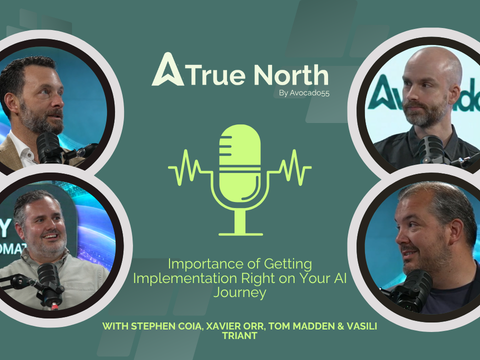

Three years ago, the conversation about Contact Centre AI (CCAI) was speculative. “Will it replace agents?” “Is it safe?”
In 2026, the speculation is over. The technology has matured, but the execution has stalled.
While every major enterprise has deployed some form of Generative AI, a shocking 70% of these projects remain stuck in ‘Pilot Purgatory’, failing to scale beyond a simple FAQ bot. Why? Because companies bought the engine (AI) before they built the road (Process).
The Evolution: From “Chatbots” to “Agents”
The era of the “dumb chatbot” that apologises and sends a link is dead. We have entered the era of Agentic AI.
-
Old World (2023): You ask a bot, “How do I return this?” It pastes a link to the policy.
-
New World (2026): You say, “Return this.” The AI Agent checks your purchase history, generates the QR code, schedules the courier, and processes the refund to your wallet—all in 3 seconds.
According to Gartner’s 2026 Tech Trends, “Agentic AI” (systems that can act autonomously) will control 20% of all work tasks by the end of the year. The question is: will they be doing the work correctly?
The Barrier: The “Garbage In, Hallucination Out” Crisis
The biggest reason for the failure of Agentic AI isn’t the software; it’s Data Debt.
You cannot layer a Ferrari engine on top of a horse-and-cart infrastructure. If your knowledge base is full of contradictory PDFs from 2019, your AI Agent won’t be “smart”—it will be confidently wrong at scale. Forrester’s 2026 Predictions highlight that “Knowledge Management” is now the #1 investment priority for successful GenAI deployments, overtaking the AI models themselves.
The Avocado55 Blueprint: Fix the Foundation First
We don’t sell you a licence and walk away. We build the Operating Model that allows AI to thrive using our proprietary ASCENT framework.
-
Phase 1: Assess: Conduct an initial scan or audit of your customer experience (CX) state to establish a clear starting point.
-
Phase 2: Survey: Undertake in-depth research and gather insight from stakeholders to understand the full picture.
-
Phase 3: Clarify: Prioritise the most critical needs and align the organisation on clear, achievable CX goals.
-
Phase 4: Engineer: Design the future-state CX model, defining the processes, experiences and technology needed to deliver it.
-
Phase 5: Navigate: Execute the plan, guiding delivery and providing hands-on support to keep momentum and remove obstacles.
-
Phase 6: Transition: Embed the change into day-to-day operations and evolve internal capabilities to sustain and build on success.
The Verdict
The question is no longer “Should we use AI?” It is “Why isn’t our AI working?”
The answer is likely in your processes, not your software.
Stop buying tools. Start building intelligence.
Don’t let another year go by with a stalled pilot. Contact Avocado55 to turn your AI investment into a competitive advantage.